You close the front door with that tiny knot in your stomach. The plants are watered, the cat is with your neighbor, the suitcase is finally zipped. You turn off the lights, check the stove twice, then stand in front of the fridge thinking, “This thing is going to be running alone for ten days.” You shrug, push the thought away, and leave for the airport.
Fast forward: you come back, drop your bags, open the freezer and everything looks… normal. Rock-solid ice cream, frosty walls, frozen peas. You breathe out in relief and start cooking with what you left behind. Life goes on.
Except, you actually have no idea what happened while you were away.
And that’s where a single coin and a cup of water can quietly change the story.
Why a coin in a frozen cup can save you from a nasty surprise
Most of us trust the freezer a bit blindly. If the food is solid when we get home, we assume it stayed frozen the whole time and we eat without thinking twice. From the outside, a freezer that lost power for six hours and refroze looks exactly like a freezer that ran perfectly the whole week.
That’s the trap. When frozen food thaws and refreezes, bacteria can multiply in the “warm” window, then get locked in again by the cold. The texture might change slightly, but nothing announces loudly: “Hey, I’m not safe anymore.” Your eyes and nose aren’t always good detectors.
Picture a summer storm while you’re away at the beach. A tree falls, the power grid goes down in your neighborhood. Electricity cuts for eight hours in the afternoon. The fridge warms up little by little, the freezer softens. The ice cream melts, the meat starts to sweat invisibly inside the packaging.
Later that evening, a technician fixes the issue. The electricity comes back quietly. Your freezer heroically starts again and everything refreezes. You arrive home three days later, open the door and find what looks like a fully functioning, trustworthy appliance. You never know that your chicken spent almost half a day in a bacteria spa.
Food safety agencies regularly remind people that you can’t just trust appearance when it comes to frozen food. There’s a clear rule: once food has thawed above a certain temperature for long enough, it should be thrown away. The problem is, on vacation, you’re not standing next to your fridge with a thermometer and a notepad.
This is where the frozen-cup-and-coin trick becomes clever. It works as a “memory” of your freezer’s temperature. A tiny, silent witness that doesn’t lie, doesn’t forget and doesn’t care how tired you are when you get home. It just shows you, in one glance, if the cold was constant or if something went wrong while you were away.
➡️ This flight crew secret keeps shoes spotless on long trips
➡️ A mother sets off to find her son missing for five years and what she discovers tears families apart
➡️ The real reason mosquitoes always seem to bite the same person first
➡️ This supermarket butter under €4 is the healthiest choice, according to 60 Millions de consommateurs
➡️ The hidden link between dehydration and sudden headaches
➡️ Better than a store-bought mask: the recipe estheticians use to hydrate the face
➡️ We Asked 5 Chefs How to Make Perfect Scrambled Eggs – They All Gave the Same Answer
How to do the coin-on-ice trick before your vacation
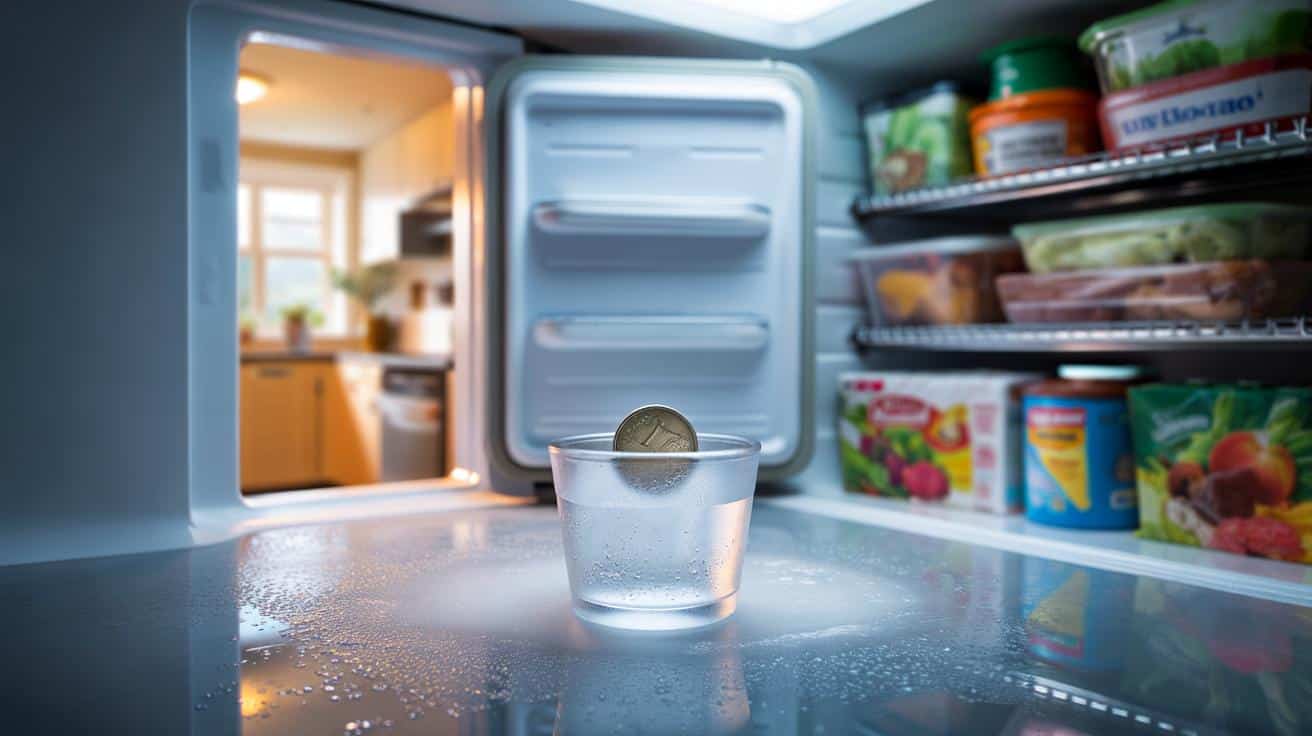
The method is almost stupidly simple. Take a small cup or mug that can go in the freezer. Fill it with tap water and place it in your freezer until the water is completely frozen. Not slushy. Solid.
Once the water has turned to ice, open the freezer, place a regular coin flat on top of the frozen surface, then put the cup back in a visible spot. That’s it. Your homemade power-outage detector is installed. No app. No smart fridge. Just physics, quietly doing its job while you’re lying on a beach somewhere.
The beauty of this trick is that you don’t need fancy equipment or complicated steps. Still, people rush before a trip and skip that 2‑minute gesture, then worry for days about the food waiting back home. We’ve all been there, that moment when you stand in the hallway on your return thinking: “Is the freezer smell… normal?”
Let’s be honest: nobody really defrosts and inspects every single item one by one after each trip. So giving yourself this tiny visual guide is a real gift to your future tired self. Just remember one thing: the cup has to be fully frozen before you add the coin, or the “signal” will be blurred.
When you come back, open the freezer and look at the coin. Its position tells you what happened.
If the coin is still on top of the ice, your freezer likely stayed cold the whole time. If the coin has sunk halfway or reached the bottom, the ice melted and refroze, which means the temperature rose significantly.
- Coin on top: your food probably stayed safely frozen.
- Coin slightly embedded: short, partial thaw. Be cautious with sensitive foods like meat or fish.
- Coin at the bottom or deep inside: the ice melted enough to let the coin fall. That means a serious power cut or long warm period. Treat the contents as unsafe and discard them.
What this little trick really changes for you
This small cup in your freezer isn’t just a life hack for social media. It’s a way of reducing that vague anxiety you feel the second you put your key in the door after a long trip. You get one clear signal instead of guessing. That alone can change your first hour back home from “Hmm, is this risky?” to “Okay, I know where I stand.”
It also quietly pushes us to think differently about the invisible things in our kitchens. The cold, the power grid, the fragile line between safe and unsafe food. We don’t see any of that, yet we trust it every single day.
| Key point | Detail | Value for the reader |
|---|---|---|
| Simple setup | Freeze a cup of water, place a coin on top, leave it in the freezer | Easy, free trick you can do before any trip |
| Visual signal | Coin position shows if the ice fully or partially melted, hinting at power cuts | Quick decision aid on whether to keep or throw away frozen food |
| Peace of mind | Reduces uncertainty after vacations or storms, especially in summer | Less stress, fewer health risks, smarter use of what’s in your freezer |
FAQ:
- Does this trick work for short power cuts?
Yes, especially if they are long enough for the ice to start melting. A brief outage of a few minutes usually won’t move the coin at all, but a longer interruption that warms the freezer will cause the ice to soften and the coin to sink slightly.- Is my food automatically unsafe if the coin has sunk?
Not automatically, but it’s a strong warning. If the coin is deep inside or at the bottom, you can assume the ice fully melted, meaning your freezer warmed up a lot. In that case, the safest approach is to discard sensitive items like meat, fish, seafood, and prepared meals.- Can I use a plastic cup or does it have to be glass?
You can use plastic, glass, or even a small metal container, as long as it’s freezer-safe. The key is that the cup is stable and the water can freeze in a way that allows the coin to sit flat on top.- Should I leave the coin in my freezer all year?
You can, especially if you live in an area with frequent storms or unstable power. Some people keep the cup and coin there permanently as a simple, continuous indicator. *It quietly becomes part of the landscape of your freezer.*- Does this replace a thermometer or smart freezer alarm?
No, it doesn’t replace professional tools, but it’s a low-tech backup that works when you don’t have anything else. For most households, this tiny hack is an easy, realistic step toward safer food and fewer nasty surprises after a trip.