A sharp hiss, a puff of steam, and that familiar rubbery smell creeps up before the cook can even reach for the spatula. Two minutes later, the plate looks… fine. Yellow, solid, technically edible. But you take a bite and there it is: dry, squeaky, forgettable. The kind of scrambled eggs you eat with your mind elsewhere.
A few days later, I’m standing in a quiet restaurant kitchen before service, watching a chef scrape trembling curds out of a pan the way you’d handle something fragile. No browning. No sizzling. Just slow, patient stirring, like he’s trying not to wake someone up. I ask him what the trick is. He shrugs, almost bored, and gives me an answer I’ve heard before.
So I asked four more chefs, in different cities, different styles, different egos. They all said the same thing.
The myth of “fancy” scrambled eggs
We like to pretend there’s a secret club of people who know how to make perfect scrambled eggs. Some mysterious cream, or a special whisk, or a celebrity-chef move you unlock after watching enough TikToks. Yet when you actually watch people cook at home, especially on busy mornings, it’s almost always the same rushed dance: pan on full blast, eggs poured in cold, stirred until they look done from across the room.
Most of us grew up on those eggs. Fast, a bit overcooked, drowned in ketchup or hot sauce. Comforting, but not exactly unforgettable. On a weekday, you might not care. But on a slow Sunday, when sunlight is spilling across the table and the coffee smells right, rubbery scrambled eggs feel like wasted potential. That’s the moment these chefs are quietly obsessed with.
When I spoke with them – a hotel breakfast veteran in London, a bistro chef in New York, a French-trained cook in Lyon, a brunch specialist in Melbourne, a Japanese omurice pro in Tokyo – they all told their version of the same story. At some point, each one thought they already knew how to scramble eggs. Then a mentor showed them a different way. Lower heat. More attention. Less ego. The first time they tasted the result, they were annoyed at themselves for all the years of “good enough” eggs.
The one rule they all repeated
Here’s the part that surprised me. I was expecting five chefs, five systems: cream vs. milk, butter vs. oil, whisk vs. chopsticks. They did disagree on those details. What they didn’t disagree on was this: **perfect scrambled eggs are cooked low and slow**. Every single one of them used those words. Not one said “medium heat”. Not one said “just crank it and move fast”. Low. And slow.
One chef in New York literally turned my hand away when I reached for the dial. “Lower,” he said. “No, lower than that.” We waited for what felt like forever as the pan gently warmed. Butter melted silently rather than sizzling. When we finally poured in the beaten eggs, nothing happened for a few seconds. No drama. Just a quiet thickening at the edges, like the start of custard. He stirred lazily with a spatula, pushing soft folds into the middle. The eggs never once made an angry sound.
Another chef showed me a different twist on the same rule. She used a double boiler at her restaurant: a metal bowl set over gently steaming water. No direct flame, no chance of scorching. At home, she admitted, she doesn’t bother with that. But she still follows the same principle: small pan, low heat, constant attention. “You’re not frying eggs,” she told me. “You’re caressing them.” It sounds dramatic, yet when you taste those silky, barely-set curds, the phrase suddenly feels accurate.
How to actually do it at home
So what does “low and slow” look like in a real kitchen, half-awake, in yesterday’s T-shirt? Three eggs, a small nonstick or well-seasoned pan, a knob of butter, a pinch of salt. Beat the eggs just until the yolks and whites are mostly combined; a few streaks are fine. Set the pan over low heat – truly low – and let the butter melt quietly. No browning, no foam racing around the edges. Pour in the eggs and count a few breaths before you even touch them.
➡️ This camper’s secret keeps food cool all day without a cooler
➡️ Better than a store-bought mask: the recipe estheticians use to hydrate the face
➡️ Forget baking soda: this housekeeper’s trick makes bad odors disappear for good
➡️ The body signal that often appears weeks before burnout hits
➡️ The real reason mosquitoes always seem to bite the same person first
Then, use a silicone spatula or wooden spoon and start moving the eggs gently from the outside in. Slow, deliberate strokes. You’re forming curds, not smashing them. When about two-thirds of the mixture has thickened into soft lumps but the rest still looks a bit wet and loose, turn off the heat. The residual warmth will finish the job. At this stage, every chef I spoke to did one thing the average home cook rarely dares: they stopped early.
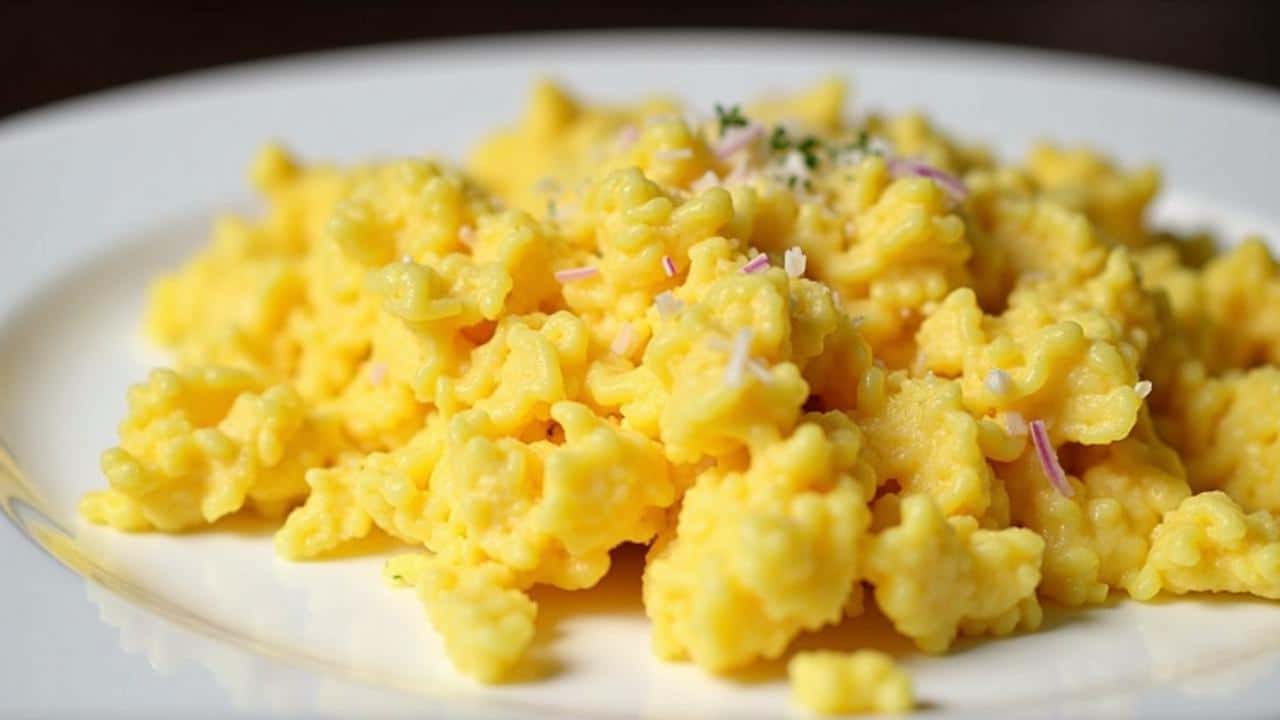
That’s the quiet secret inside the bigger rule. Perfect scrambled eggs are pulled from the heat *before* they look done. They should slide onto the plate glossy and just-set, with a sheen that makes you think “Is this too soft?” Then, in the 30 seconds it takes to sit down and pick up your fork, they firm up into that ideal, tender texture. One French chef summed it up like this: **“If they look perfect in the pan, they’re already overcooked.”**
The mistakes everyone makes (and how chefs talk about them)
Most home cooks make the same three errors: heat too high, pan too big, and walking away. High heat gives you speed and drama, but it also gives you tough protein and browned spots that taste faintly bitter. A big pan spreads the eggs thin so they cook unevenly. And that moment you open the fridge “just to grab the cheese” while your eggs are on the flame? That’s when they jump from creamy to dry without warning.
On a human level, the chefs actually get it. They laughed when I asked if they always cook eggs perfectly at home. “Of course not,” one said. “I have kids.” Another admitted he sometimes makes fast, overcooked eggs when he’s hungover and just wants protein. Soyons honnêtes : personne ne fait vraiment ça tous les jours. The difference is, once you’ve tasted what low and slow can do, it’s hard to un-know it. It becomes your baseline for those mornings that actually matter.
One chef in Melbourne put it bluntly:
“The egg doesn’t forgive you. If you rush it, it remembers. If you take your time, it gives you everything.”
Here’s the part that’s strangely comforting: you don’t need a chef’s kitchen, a copper pan, or farm-poached unicorn eggs to get there. You just need to trade a bit of speed for attention. And maybe keep this tiny checklist somewhere near your stove:
- Start with low heat, then go even lower.
- Use a small pan so the eggs stay shallow and easy to control.
- Stir gently and often, forming soft curds instead of breaking them up.
- Take them off the heat while they’re still slightly glossy and loose.
- Add extras (cheese, herbs, cream) at the end, never at the beginning.
Why this small detail feels bigger than breakfast
There’s something almost meditative about cooking scrambled eggs this way. You can’t doomscroll while you do it. You can’t send a voice note, empty the dishwasher and water your plants between stirs. You have to stand there, present, watching the transformation from liquid to custard-like folds. That tiny pause – five unbroken minutes of attention – changes the taste more than any fancy ingredient.
On a deeper level, this is one of those rare kitchen skills where the effort-to-reward ratio is wildly in your favor. You’re not learning a complicated pastry or a restaurant-level sauce. You’re literally making something you’ve made hundreds of times before. Yet shifting the heat down and your patience up takes scrambled eggs from “background food” to the star of the plate. On a bad day, that small upgrade can feel weirdly uplifting.
On a good day, you might find yourself inviting someone to sit a little longer at the table, just because the eggs turned out so nice. Breakfast stretches, conversation slows, and the rush of the day holds off for four, maybe five extra minutes. It’s a tiny act of care, humble enough to repeat, special enough to remember. And once you know that all five chefs gave the same answer, it’s hard not to pass it on.
| Point clé | Détail | Intérêt pour le lecteur |
|---|---|---|
| Cuisson “low and slow” | Feu très doux, cuisson lente, retrait avant que les œufs ne paraissent totalement cuits | Transforme des œufs ordinaires en texture crémeuse et soyeuse, sans technique compliquée |
| Petite poêle et attention constante | Utiliser une petite poêle, remuer doucement et régulièrement sans quitter la cuisson des yeux | Réduit les risques d’œufs caoutchouteux ou brûlés, même dans une cuisine encombrée |
| Arrêter la cuisson tôt | Sortir la poêle du feu quand les œufs sont encore brillants et légèrement coulants | Permet aux œufs de finir de cuire par inertie et d’atteindre la texture idéale dans l’assiette |
FAQ :
- Should I add milk or cream to scrambled eggs?Chefs are divided: some like a splash of cream for richness, others prefer just eggs, butter and salt. What they all agree on is that texture comes more from low heat and timing than from dairy.
- Why do my scrambled eggs turn watery?That usually comes from overcooking or letting them sit too long in a hot pan. Pull them off the heat earlier and serve immediately, rather than holding them in the pan.
- Is it better to salt eggs before or after cooking?Most chefs salt the eggs before they hit the pan. It helps the proteins relax and gives a more even seasoning. Just don’t drown them; a small pinch goes a long way.
- Can I make great scrambled eggs with oil instead of butter?Yes, but butter brings flavor and that gentle, creamy mouthfeel. If you use oil, choose a neutral one and focus even more on low heat and gentle stirring.
- How long should scrambled eggs take on low heat?Depending on your stove and the number of eggs, anywhere from 4 to 8 minutes. If they’re done in 60 seconds, your heat was too high – slow them down next time.