The waiting room smelled faintly of eucalyptus and coffee when the esthetician leaned closer and said, almost in a whisper: “You know, the mask I use on clients isn’t from a jar.”
On the treatment bed, a young woman with tired eyes and city-dry skin let out a soft laugh. Her phone screen still showed a cart full of expensive hydrating masks she was about to order the night before. She had canceled at the last minute, hit by a vague sense that none of it would really change anything.
A few spoonfuls of ingredients you’d expect to find in a kitchen, not a spa, were mixed with the precision of a pastry chef. Something about the simplicity felt almost rebellious, in a world where hydration has become a luxury label. The mask went on cool and thick, and within minutes her skin seemed to exhale, as if it had been holding its breath for months.
Later, she asked for the brand name, ready to Google it on the way home. The esthetician just smiled and tapped the bowl with the spatula. “This,” she said, “is the recipe the nice jars are trying to imitate.”
And that’s where the story really starts.
Why estheticians swear by a homemade-style hydrating mask
Ask any seasoned esthetician what actually transforms parched skin, and they’ll rarely point first to the prettiest packaging. They talk about texture, pH, and how long something stays damp on the face. Hydration isn’t just about what you put on your skin, it’s how long water is trapped there.
Store-bought masks are built for the shelf, for the selfie, for that glossy moment in the bathroom mirror. Professional recipes are built for the skin barrier. The one estheticians quietly remix over and over again usually looks humble: a base rich in humectants like glycerin or honey, a soothing fat (think yogurt or aloe gel plus a drop of oil), and an occlusive touch to lock it all in.
What they’re really doing is replicating, with simple tools, the three pillars of true hydration: attracting water, holding it, and sealing it. No holographic packaging required.
One facialist in London told me that about 7 out of 10 clients who come in complaining of “dry skin” are actually just dehydrated. Their skin isn’t necessarily lacking oil; it’s leaking water all day long. They arrive clutching sheet masks and overnight gels that promised “72-hour moisture,” yet still feel that tight, papery sensation the morning after.
She started using her own mix for them: a thick, paste-like mask with plain Greek yogurt, medical-grade glycerin, a dash of honey, and a drop or two of calming oil. “It looks like breakfast,” she joked, “but the glow is serious.” After a single session, many report their skin feeling softer for days, not hours. The before-and-after photos are subtle, more about plumpness and light reflection than dramatic filters.
One client in her 40s, who’d tried every “cloud cream” and “water-burst mask” she could find, cancelled her subscription boxes after two facials. “I realized,” she told me, “I kept buying the same promise in a different jar.” That’s the quiet revolution this kind of mask creates: less noise, more results.
There’s a simple logic behind why these pro-style recipes often beat store-bought masks. Many commercial products juggle long ingredient lists, fragrances, stabilizers and thickening agents so the formula feels luxurious and lasts on a shelf for years. That doesn’t automatically make them bad, but it means the concentration of the ingredients your skin is actually thirsty for can get watered down.
➡️ The hidden link between dehydration and sudden headaches
➡️ One spoon is enough : Why more people are putting coffee grounds in the toilet
➡️ This supermarket butter under €4 is the healthiest choice, according to 60 Millions de consommateurs
➡️ The body signal that often appears weeks before burnout hits
➡️ Controversy as bird experts claim this winter fruit traps robins in the same garden for years
➡️ This flight crew secret keeps shoes spotless on long trips
In a professional bowl, things are stripped back. The “formula” can be adjusted on the spot for each face. Skin that’s red and sensitized? More aloe, less honey. Skin that’s dull and flaky? Extra glycerin and a richer drop of oil. Estheticians aren’t chasing a marketing claim; they’re chasing how the skin texture feels under their fingertips when they wipe the mask away.
*Hydration, at that level, is physical, not theoretical.* It’s how the skin stretches when you smile. Whether your cheeks still feel comfortable at 5 p.m. That’s what these recipes are built to change.
The esthetician-style recipe: simple bowl, serious results
Here’s the kind of hydrating mask formula many pros quietly lean on, adapted for home but faithful to their logic. Start with 2 tablespoons of plain, full-fat Greek yogurt in a small bowl. It gives you lactic acid in gentle doses, plus that creamy, cooling base that clings to the skin just enough.
Add 1 teaspoon of vegetable glycerin (the unscented kind you’ll find in pharmacies) and 1 teaspoon of raw honey. Stir slowly until the mix looks glossy and uniform. Then drop in 3–4 drops of a skin-friendly oil: jojoba for combination skin, squalane for sensitive types, or sweet almond for dry faces that drink up everything.
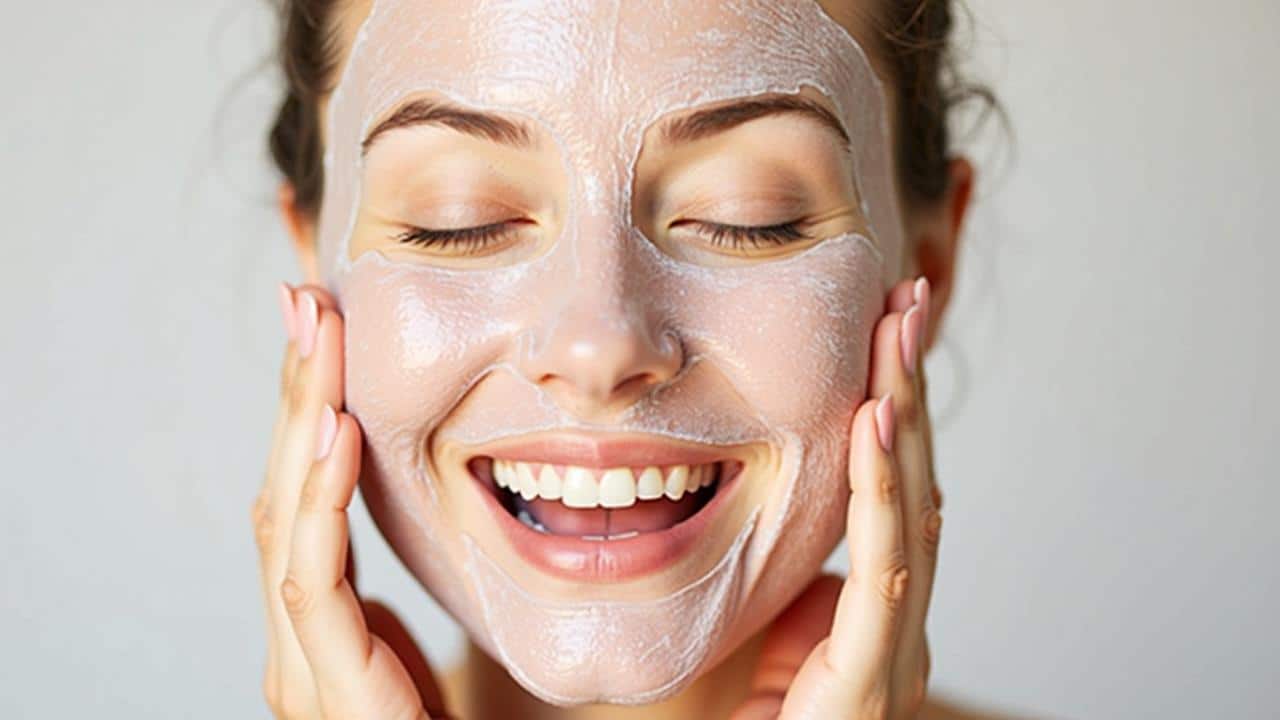
Spread the mask in a generous layer over clean, slightly damp skin, avoiding the eyes. Let it sit 10–15 minutes, keeping it moist by misting water if it starts to dry. Rinse with lukewarm water and a soft cloth. Pat, don’t rub. That’s it. No twelve-step ritual. Just a bowl, a spoon, and a bit of attention.
This is where the gap appears between theory and actual life in the bathroom. Yes, you could do this mask twice a week and your skin would probably love you. Soyons honnêtes : personne ne fait vraiment ça tous les jours. You’ll have late nights, forgotten grocery lists, evenings where the only mask you manage is scrolling in the dark.
The goal isn’t perfection. It’s consistency over panic. Use this mask when your skin starts to send those early signals: makeup cracking around the nose, foundation clinging to flakes, that faint sting after cleansing. Once a week is already a quiet game changer. And if you have reactive skin, patch-test on the jawline first, just to keep the peace.
Common mistakes? Slapping it on over harsh acids. Scrubbing hard just before applying. Leaving it on until it’s bone-dry because “more time = more effect”. Hydrating masks work best when the skin is calm, not inflamed, and when the formula stays slightly damp, not crusted like overbaked pastry.
“People think dry skin is something they can fix in one Sunday night,” confided an esthetician who’s been working in a tiny Paris backstreet salon for 18 years. “Real hydration is a relationship. This mask is just how you say: ‘I’m listening’.”
There’s a strange comfort in having a recipe that doesn’t depend on a brand still being in stock or a sale happening this week. You own the know-how, not just the product. And once you’ve tried it a few times, you’ll probably start to adjust it without even thinking: a drop more oil in winter, a lighter layer in summer, less honey if you’re a bit breakout-prone.
- Shortcut for busy nights: mix just yogurt, glycerin and a single drop of oil in your palm and use it as a 5-minute “shower mask”.
- For very sensitive skin: swap honey for aloe gel and keep the mask on for 8–10 minutes only.
- Glow boost before an event: apply the mask, rinse, then press 2–3 drops of your usual serum into still-damp skin.
- *Never* apply on broken or sunburned skin; let it heal first.
That’s how a simple bowl starts to feel less like a DIY experiment and more like a quiet, reliable ritual.
Beyond the recipe: what this kind of mask really changes
Something shifts once you’ve watched your own skin respond to this kind of straightforward, esthetician-style care. The relationship with your bathroom shelf softens. You stop chasing miracles and start noticing patterns: what your face does after long-haul flights, office heating, a week of bad sleep. This mask becomes less of a beauty trick and more of a reset button.
And there’s that shared, slightly embarrassing memory we don’t always say out loud. On a low day, you’ve probably stood at the mirror, pressing at the lines around your mouth, pulling your cheeks up just a little to see “how it used to look”. On a better day, you rinse off a mask like this and feel your skin push gently back against your fingers. No fantasy facelift. Just a sense that your face fits you again.
That’s the quiet power of real hydration work. It won’t erase every mark or rewrite your genes. It can soften the way foundation sits in a crease, make your skin less reactive to weather changes, let you go through the day without that constant urge to reapply cream. And strangely, it may also change the way you read beauty promises. Once you’ve seen what a bowl of yogurt, glycerin, honey and oil can do, the “miracle gel” copy hits a little differently.
Maybe that’s what estheticians are really giving away when they share their recipes. Not just a mask. A way to stop treating your skin like a problem to fix and start treating it like a living thing that needs rhythm, water and a bit of fat to be okay.
| Point clé | Détail | Intérêt pour le lecteur |
|---|---|---|
| Base du masque pro-style | Yogurt, glycerin, honey, a few drops of gentle oil | Reproduces the hydrating logic estheticians use in the treatment room |
| Mode d’action | Humectants attract water, lipids and light occlusives lock it in | Explains why the skin feels plumper and stays comfortable longer |
| Rythme d’utilisation | Once or twice a week, on calm, clean skin | Makes results achievable in real life, not just in ideal routines |
FAQ :
- Can I use this mask if I have acne-prone skin?Yes, with a tweak: keep the honey very light or skip it if you know you react to it, use non-comedogenic oils like squalane, and limit to once a week. Always patch-test first along the jawline.
- How long before I see a real difference in my skin?You’ll often feel improved softness right away, but deeper changes in texture and comfort usually show after 3–4 consistent uses over a month.
- Is this mask better than a high-end hydrating sheet mask?“Better” depends on your skin, but this style of mask tends to give longer-lasting comfort because it’s thicker, stays damp longer, and can be adapted to what your face needs that day.
- Can I store the mixture for later?It’s meant to be fresh. If you make too much, keep it in a clean, closed container in the fridge and use within 24 hours, but don’t keep it longer.
- Can I still use my usual skincare products with it?Absolutely. Think of this mask as a weekly boost. Keep strong acids or retinoids for another night and follow the mask with a simple serum and cream while your skin is still slightly damp.