The café was half-empty, a Tuesday afternoon in that slow hour when the world feels like it’s on pause.
At the corner table, a woman in her late forties was laughing with a young barista about her “second life” starting at 45. No self-help book in sight, no dramatic makeover. Just a quiet certainty in her voice when she said, “I finally stopped asking if I’m late. I just ask: what do I want now?”
At the next table, a student scrolled endlessly on TikTok, half-smiling at other people’s lives. On her face: that mix of envy and dread you can spot from far away. Two ages, two timelines, same heavy question swirling in the air: is the best of life behind me, or still ahead?
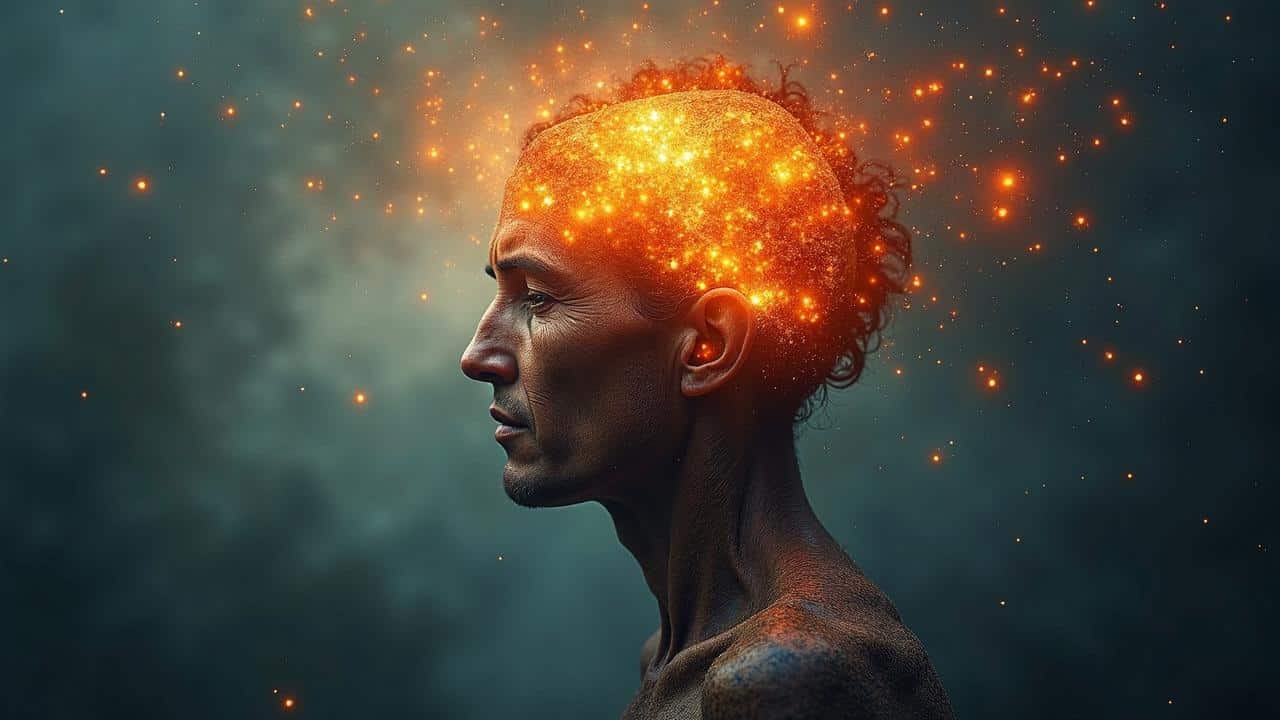
According to one psychologist, the turning point doesn’t come from a birthday or a promotion. It starts the day your inner question changes.
The quiet mental switch that changes everything
The psychologist’s name is Dr. Elena Brooks, and she’s very clear about one thing: your “best stage of life” is not a number. It’s a mindset. She has spent twenty years listening to people in her office say the same painful sentence in different ways: “I thought I’d be further along by now.”
What she sees, again and again, is the same trap. We live as if life were a race against some invisible scoreboard: career, kids, money, looks, status. When her patients talk about their forties, fifties or sixties, they often speak as if the real game is already over. Elena’s answer is always the same: the game only really starts when you stop playing by other people’s rules.
One of her stories sticks. A 52‑year‑old man, successful on paper, came to see her convinced that he had “missed his moment”. Divorce, grown kids, career plateau. He was living like a museum guide of his own past, always pointing at old trophies instead of looking out the window.
Week after week, they worked on one single question: not “what have I lost?” but “what can I still build?” He started small. A pottery class. A weekend hiking group. Calling his son just to talk, not to fix anything. Six months later, he told Elena: “For the first time, I feel like my life isn’t shrinking. It’s changing shape.”
Nothing huge had happened from the outside. Same job, same city, same aging body. Yet his days felt strangely wider. More breathable. He wasn’t chasing youth anymore; he was exploring possibility.
That’s the mental switch Elena insists on. She calls it the “forward-thinking lens”. Most of us walk around with a “backward lens”: we compare everything to what we had, what we were, what we hoped to be at this age. That lens magnifies regrets and quietly erases room for growth.
The forward-thinking lens does the opposite. It asks: given who I am today, with these scars, these skills, these limits, what could still become true in my life? This isn’t forced optimism. It’s a change of perspective about time. Instead of treating the past as your golden standard, you treat the present as raw material.
➡️ The forgotten kitchen liquid that makes grimy cabinets smooth, clean and shiny with almost no effort
➡️ No more duvets in 2026? The chic, comfy and practical alternative taking over French homes
➡️ Doorbell camera captures conversation about stolen vehicle, leading to felony charge | Select
➡️ The forgotten soak that restores cast iron pans to a smooth, black finish
➡️ I do this every Sunday": my bathroom stays clean all week with almost no effort
➡️ Goodbye to the dining table : the new trend from abroad that replaces it for good in homes
Dr. Brooks is adamant: “Your best stage begins the day you stop evaluating your life as a finished product and start treating it as a living project.” The age when that happens varies. The effect does not.
How to start thinking like your best years are ahead
Elena suggests a surprisingly simple daily move: change the question you ask yourself in the morning. Most people wake up with something like, “What do I have to get through today?” She invites her patients to ask: *What tiny thing could make today a little more mine?*
It sounds almost childish. Yet it nudges the brain away from survival mode and into authorship. One woman in her sixties started by adding a ten‑minute walk before breakfast. Another decided Tuesday night would be “friend night”, even if it was just one coffee on FaceTime. Those small choices were not about productivity. They were about reclaiming agency.
The moment you act as if you still have influence over the shape of your days, your nervous system registers a different story: life is not something merely happening to you; you are part of the engine.
Elena also uses a short writing exercise that looks almost too simple. She asks people to complete three sentences on paper:
“I used to think my best years were when…”
“Now I suspect my best years might be when…”
“One thing that could make that true is…”
On a grey Wednesday, a widower in his seventies wrote: “I used to think my best years were when my wife was alive. Now I suspect my best years might be when I start sharing what she taught me with others. One thing that could make that true is volunteering at the community kitchen.”
Bruising honesty on one line, fragile hope on the next. That’s the paradox Dr. Brooks looks for. When people see both loss and possibility on the same page, something in them relaxes. The story is not either/or anymore. It becomes both/and.
There’s a logic behind this shift. When you tell yourself that your best is behind you, your brain quietly stops investing in the future. You delay projects. You avoid trying new things because “what’s the point now?”. Over months and years, life gets smaller, which then confirms your original belief that everything good has already happened.
Reversing the belief unlocks the opposite loop. If you genuinely hold the idea that something deeply meaningful can still appear later, you take more small risks. You sign up for the class. You say yes to the invitation. You leave the job or stay in it for a different reason. Some of those attempts fail, of course. Yet a few create new friendships, new skills, new forms of joy that you never had at 20.
On a brain level, this mindset reduces what psychologists call “future discounting” – our habit of valuing tomorrow less than today. You start to experience your later years not as leftovers, but as a season with its own flavor, projects and first times. That’s when, according to Elena, real peace and energy show up together.
Practical ways to shift into this new stage of life
Elena often starts with what she calls a “life inventory of ongoing stories”. She asks patients to list not their achievements, but the threads that are still in motion: relationships, interests, questions they care about, physical capacities they still have.
Then she asks a slightly provocative question: “If this were chapter one, what would you do with these elements?” Suddenly a 39‑year‑old single mother doesn’t just see exhaustion; she notices resilience, social skills, an interest in photography, and a daughter who adores her. That reframing opens the door to unexpected scenarios: evening classes, a support circle, a side project with a camera on weekends.
This isn’t magic. It’s one mental step: stop cataloguing endings, start spotting beginnings hiding inside them.
She also warns about a common trap: waiting to “feel ready” before making any change. People tell her, “Once I feel motivated, I’ll start treating my life like it’s not over.” Her reply is blunt: motivation doesn’t come before action, it follows it.
So she suggests micro‑commitments. Fifteen minutes a week for something that belongs only to you. A phone call to the friend who energises you. Learning one new thing about your own body, your own city, your own curiosity. The goal isn’t transformation. It’s evidence. Each small act proves to your brain that your story is still editable.
Soyons honnêtes : personne ne fait vraiment ça tous les jours. Life happens. Kids get sick, work explodes, fatigue wins. That’s fine. Elena’s rule is simple: miss a day, not a pattern. The mindset shift survives imperfection.
At some point in therapy, Elena usually says a sentence that lands like a slap and a hug at the same time:
“You are not late for your life. You are exactly on time for this version of it.”
People cry when they hear that. Or they get angry. Or they laugh with a kind of nervous relief. Because underneath their schedules and responsibilities, that’s the question burning: am I late?
To make this new way of thinking stick in real life, she suggests a simple weekly ritual:
- Pick one evening per week and name it: “Next Chapter Night”.
- Spend 20 minutes asking: what did I do this week that future‑me might thank me for?
- Write down one thing you’ll try next week that aligns with the belief that good things can still start now.
Nothing fancy. A notebook. A cup of tea. A little courage to look at your life as something not yet fully written.
A life that stretches forward, not just backward
On a crowded train at rush hour, look around and you’ll see it in faces: some people are living forward, some are living backward. The forward ones don’t necessarily look happier. They look engaged. Their eyes move as if they’re still in conversation with their own future.
We rarely talk about this openly. We talk about staying young, staying fit, staying relevant. We don’t often talk about the quiet terror of suspecting that the movie has already hit its peak, and that everything now is just credits rolling very slowly.
Dr. Brooks’ work cuts right into that fear. She doesn’t promise eternal youth, or a miracle that erases regret. She offers something more modest and more radical: a different role in your own story. Not the nostalgic commentator, not the exhausted extra. The co-writer.
Some readers will reject this at first. They’ll say: “You don’t know my life. You don’t know what I’ve lost.” They’re right. Nobody outside can fully measure another person’s wounds. And *still*, there is this strange and stubborn truth: the mind can hold both grief and fresh plans at the same time.
We have all already lived that moment where we thought we were done with joy in one area, only to be surprised later by something or someone we hadn’t seen coming. The best stage of life, in Elena’s view, is the one where we stop treating those surprises as accidents and start preparing room for them.
| Point clé | Détail | Intérêt pour le lecteur |
|---|---|---|
| Changer la question intérieure | Passer de “Suis‑je en retard ?” à “Que puis‑je encore construire ?” | Réduit le sentiment d’échec et ouvre un vrai sentiment de possibilité |
| Prendre un “inventaire de vie” | Lister les histoires en cours plutôt que les pertes et les regrets | Aide à voir les ressources actuelles et à imaginer un prochain chapitre crédible |
| Instaurer de micro‑engagements | Petites actions hebdomadaires alignées avec la croyance que le meilleur peut encore venir | Crée une preuve concrète que la vie reste modifiable, même à un âge avancé |
FAQ :
- What does the psychologist mean by “best stage of life”?Not a perfect, pain‑free period, but a season where you feel both grounded in who you are and genuinely excited about what could still happen.
- Can this mindset really matter if my circumstances don’t change?Yes. You might keep the same job, city or family situation, yet experience a very different quality of life once you stop seeing yourself as “after the main story”.
- Is there an ideal age to start thinking this way?No. Some people get there in their thirties, others after retirement. The moment you question the idea that you’re “too late”, you’re already stepping into it.
- What if I have real regrets about past choices?Regret doesn’t disqualify you from a good future. It becomes raw material: information about what you value and what you want to do differently now.
- How can I begin today, in a very small way?Tonight, take five minutes and write one thing you still want to experience, learn or give. Then note one tiny action this week that moves you one centimeter in that direction.