<strong>Eggs sit in supermarket aisles without chilling, then head straight into our fridges at home.
Somewhere between both, risks quietly grow.
Most households treat a box of eggs like a harmless staple: toss it in the fridge, shut the door, forget about it. Yet small storage mistakes can push bacteria to thrive, shorten freshness and change the taste of what ends up on your plate.
The strange case of supermarket shelves vs home fridges
Many shoppers notice the same thing: eggs are not chilled in the store, but almost everyone refrigerates them as soon as they get home. That contrast creates confusion, and the internet adds more noise with conflicting advice.
In Europe and the UK, eggs are not washed in the same way as in the US. They keep their natural outer film, the cuticle, which acts like a microscopic raincoat against germs. So supermarkets can safely keep them at room temperature, as long as the temperature stays stable and the rotation is fast.
At home, conditions look very different. Kitchens heat up when you cook, windows let in sunlight, and storage times stretch over days or weeks. Cold storage then becomes a serious safety measure, especially for vulnerable people.
Room temperature in the supermarket is controlled and stable. Room temperature at home is unpredictable and often too warm.
The real question is not “fridge or no fridge?” but “where in the fridge, and how?”
Why the fridge door is a bad place for eggs
The bright plastic egg rack inside the fridge door looks made for the job. It is also, from a food safety angle, one of the worst spots.
Temperature swings at every opening
Every time you open the door, warm air rushes in. The inside of the door experiences the strongest and most frequent changes. Eggs stored there go through a mini heat–cold cycle dozens of times a day.
These swings weaken the cuticle, create condensation on the shell, and support bacteria movement through the pores of the shell toward the inside of the egg.
➡️ The exact moment in the day when your brain solves problems the fastest
➡️ Road safety signals Here’s what a yellow rag on a motorbike’s handlebar really means
➡️ What happens to your blood sugar when you snack late at night
➡️ A mother sets off to find her son missing for five years and what she discovers tears families apart
➡️ The body signal that often appears weeks before burnout hits
➡️ This carpenter’s secret restores color to dull wood in seconds
➡️ The real reason mosquitoes always seem to bite the same person first
Condensation on the shell acts like a tiny water slide for bacteria, helping them move from the surface into the egg.
Why the original box is not perfect either
Leaving eggs in their cardboard box looks practical and tidy. That box, though, has some hidden drawbacks:
- Cardboard is porous and can trap moisture.
- It can hold dust and dirt from the farm, lorry or shelf.
- Spills and leaks from other foods in the shopping bag can contaminate the box.
- Odours from strong-smelling foods can cling and seep through to the eggs.
None of this means you must panic about cardboard packaging. But for long storage at home, there are safer ways to handle it.
The best place for eggs in your fridge
The safest way to store eggs combines two things: a stable cold temperature and physical protection from cross-contamination.
Choose the calmest, coldest zone
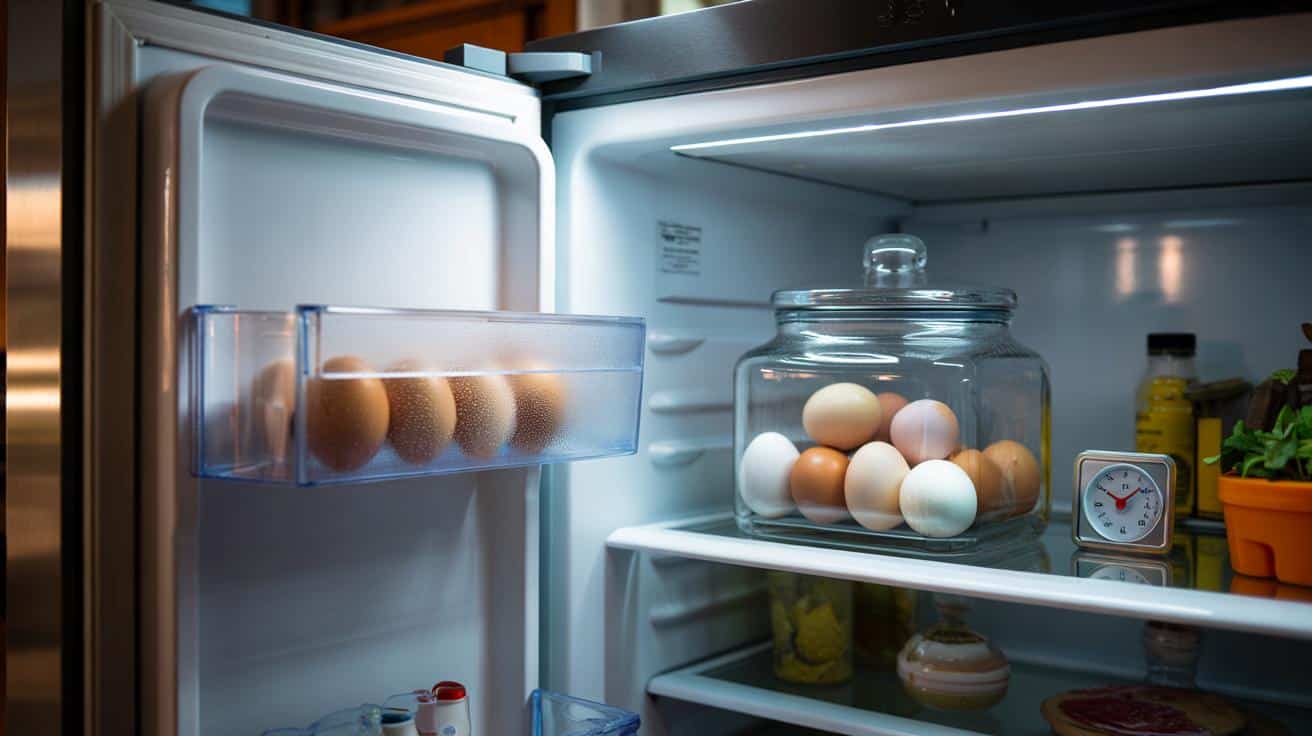
The upper shelves, not the door and not right above the salad drawer, often give the best balance. Temperature there changes much less than in the door.
Keep the fridge at about 4 °C / 40 °F. Many fridges run warmer than people think, so a simple fridge thermometer pays for itself very quickly.
Use a clean, washable container
Instead of leaving eggs in their original outer box, move them into a clean container:
- A glass box or jug, easy to wash and dry.
- A dedicated plastic egg tray that you scrub regularly.
- A ceramic dish with a lid to shield them from smells.
Place the eggs pointed end down. This keeps the air cell at the top, away from the yolk, which slows deterioration and helps the yolk stay centred when you cook.
Storing eggs with the pointed end down helps the yolk stay away from the air pocket, making the egg last longer and cook more evenly.
Do not wash eggs before storing them
Many people feel tempted to give eggs a quick rinse once they get home, especially if they see a bit of dirt. That habit removes the natural barrier of the cuticle. Water can actually drag surface bacteria through the shell.
If an egg looks heavily soiled, throw it away or use it immediately in a well-cooked dish. For light marks, a dry paper towel usually does the job.
How long can you safely keep eggs?
Dates on cartons often confuse shoppers. “Best before” does not mean the same as “use by”. With eggs, timing matters because the shell stays porous and the inside slowly changes.
| Storage method | Approximate safe time | Notes |
|---|---|---|
| Room temperature (cool, under 20 °C / 68 °F) | Up to 7–10 days after purchase | Shorter in summer or warm kitchens |
| Refrigerated, in stable cold zone | 3–5 weeks after purchase | Texture and taste slowly decline |
| Hard-boiled, refrigerated | Up to 1 week | Store in a closed container |
These are general indications, not legal guarantees. When in doubt, combine the date with a freshness test.
The simple water test that reveals freshness
One of the simplest kitchen checks needs only a glass and cold water.
The float test, step by step
- Fill a glass or bowl with cold water.
- Gently lower the egg into the water.
- Observe the position of the egg.
What you see tells you a lot:
- Egg sinks and lies flat on the bottom: very fresh, ideal for poaching or soft-boiling.
- Egg sinks but stands upright: still safe if it smells normal, but less fresh. Better for baking or hard-boiling.
- Egg floats: throw it away, the air cell has grown large, a sign of advanced ageing.
If an egg floats to the surface, do not argue with it. That egg belongs in the bin, not in your pan.
Always crack the egg into a separate bowl before adding it to a recipe. Look for a firm yolk and thick white, and trust your nose: any odd smell means the egg should not be eaten.
Health risks when egg storage goes wrong
Poor storage does not just spoil brunch plans. It raises the risk of foodborne illness, especially from bacteria such as Salmonella. Young children, older adults, pregnant women and anyone with a weakened immune system face higher risks.
Symptoms range from stomach cramps and nausea to fever and diarrhoea. Many cases never get reported, because people blame a “simple tummy bug”. Yet quite a number start with mishandled eggs or undercooked dishes.
Some basic rules cut this risk sharply:
- Keep eggs cold from the time you get home.
- Avoid recipes using raw egg for vulnerable guests, for example homemade mayonnaise or tiramisu.
- Cook eggs until the white is set and the yolk is no longer runny for high‑risk people.
- Wash hands, knives and boards after handling raw eggs.
Reading the codes on eggs: what those numbers really mean
Each egg in the EU and UK carries a stamp: a number, two letters and more digits. That code reveals how the hen lived and where.
- 0 – organic farming: hens get outdoor access and organic feed.
- 1 – free-range: outdoor access, but not necessarily organic feed.
- 2 – barn: hens move indoors, with no outdoor access.
- 3 – caged systems: the most restricted environment.
Beyond welfare and ethics, farming systems can slightly shift nutrition and taste, for example through differences in feed. Some labels also guarantee limits on antibiotic use and specific quality checks.
The code on the shell is not decoration. It tells you how the hen lived and helps you track the egg back to its farm.
From supermarket to plate: a practical storage routine
Turning this into habit takes just a few minutes after each grocery trip. A simple routine might look like this:
- Buy eggs towards the end of your shop so they spend less time in a warm trolley or car.
- Once home, unpack them first, before chilled foods that can wait a moment longer.
- Open the box, check for cracks or leaks, and discard any damaged eggs.
- Transfer intact eggs to a clean container, pointed end down.
- Write the purchase date on a small label or on the container lid.
- Place the container on a stable upper shelf, not in the door.
This short sequence protects your food, reduces waste and stops you from playing “guess the date” a few weeks later.
What changes when you use a lot of eggs?
Home bakers, gym enthusiasts and large families sometimes go through several cartons a week. Bulk use slightly changes the risk profile. Eggs stay less time at home, but you handle them more often and mix them into dishes that might not get fully cooked.
In that context, two habits matter even more: cracking each egg into a separate cup before adding it to a large batter, and cleaning surfaces frequently. One bad egg in a bowl of twelve turns the whole mixture into a problem if you only spot the smell later.
Restaurants and bakeries follow strict temperature rules and rotation systems for exactly this reason: every extra hand and every big batch multiplies opportunities for contamination.
Linked questions: freezing, boiled eggs and meal prep
Many households now plan meals ahead and look for ways to batch-cook protein. Eggs fit nicely into that trend, but with limits.
Whole eggs in their shells do not freeze well. The liquid inside expands, cracks the shell and ruins the texture. You can, however, freeze beaten eggs without shells in small containers, clearly labelled, and later use them for baking or scrambled eggs.
Hard-boiled eggs, stored shelled in a closed box in the fridge, suit salads and lunchboxes for about a week. After that, the white takes on a rubbery texture and the flavour turns sulphurous. Storing them next to strong-smelling foods, like cut onions or blue cheese, also changes their taste, as the shell and membrane still allow odours to pass through.
Anyone eating eggs daily for fitness or weight management should pay special attention to storage discipline. Repetition magnifies habits, good or bad. Safe storage, clear labelling and firm cooking bring the nutritional benefits of eggs without the invisible risks that come from a warm kitchen and a busy fridge door.