In a sea of yellow tubs and golden blocks, one modest French butter quietly stands out on health grounds, and on price.
Supermarket dairy aisles often look identical: same packaging codes, same promises of “light”, “rich” or “extra-creamy”. Yet a recent investigation by French consumer magazine 60 Millions de consommateurs suggests that the way butter is made, and not just its fat content, can drastically change what ends up on your plate.
The butter that wins on health without wrecking your budget
For its 2024 guide on how to choose butter wisely, 60 Millions de consommateurs tested a wide range of products sold in French supermarkets. Instead of chasing exotic ingredients or trendy labels, their experts went back to basics: cream quality, processing method, composition, and respect for European regulations.
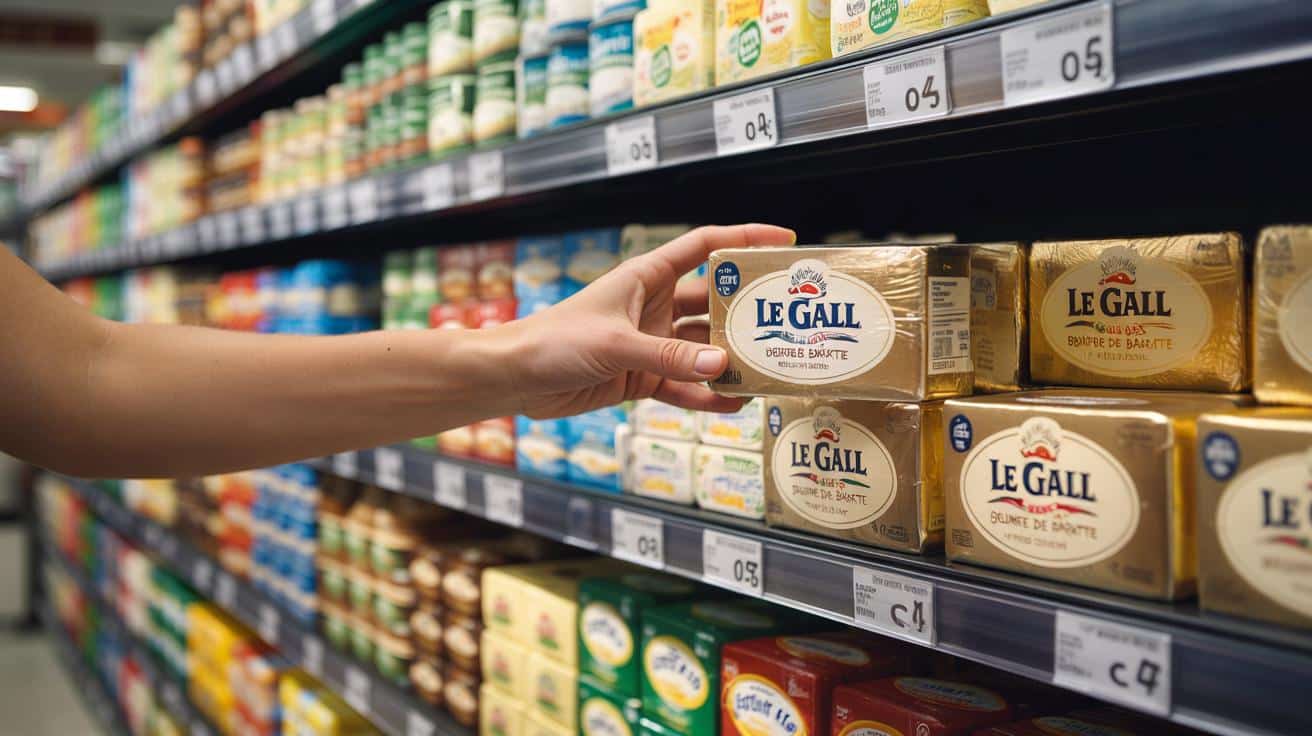
Their verdict puts a very traditional product at the top: churned butter, known in French as “beurre de baratte”. In particular, the magazine highlights churned butter from the Breton brand Le Gall, a name that rarely appears in glossy lifestyle features but carries weight among butter enthusiasts.
According to 60 Millions de consommateurs, Le Gall churned butter offers one of the healthiest profiles on the shelf while staying under the €4 mark in French supermarkets.
This butter comes from non-pasteurised cream that matures slowly before spending close to 24 hours in a traditional churn. That long, mechanical agitation might sound old-fashioned, yet it creates a different product from what industrial continuous churners deliver in minutes.
Le Gall’s churned butter shows a complex flavour profile, often described as nutty, with notes reminiscent of raw milk. It comes in unsalted, lightly salted and organic versions, which matter for consumers watching their sodium intake or looking for more sustainable farming practices.
Despite this artisan-style process, its price generally stays below €4 in French supermarkets, positioning it squarely in the everyday basket rather than in the luxury niche. For a consumer audience used to paying more for “healthier” products, the message feels almost counterintuitive: you do not need a premium bill to get a better butter.
What legally counts as butter in Europe
This investigation also reminds readers that “butter” is not just a marketing word in the European Union. It follows a strict legal definition that aims to protect consumers from misleading fat spreads.
Under a 1994 EU regulation on spreadable fats, a product can carry the “butter” label only if:
➡️ China’s CR450 does (almost) better than the French TGV and writes its name in train history
➡️ Neither in the box nor in the fridge door: how to store eggs to protect your health
➡️ The exact moment in the day when your brain solves problems the fastest
➡️ This flight crew secret keeps shoes spotless on long trips
➡️ Controversy as bird experts claim this winter fruit traps robins in the same garden for years
- milk fat content reaches at least 80% and stays below 90%;
- water stays at or below 16%;
- non-fat dry matter does not exceed 2%.
These numbers may sound technical, but they serve a simple purpose: when you buy butter, you should be getting almost only cream fat and a little water, not a cocktail of additives or plant-based fillers.
On a straight butter, the ingredient list should basically show cream and, where relevant, salt – nothing more elaborate.
For many shoppers, this comes as a surprise. Packaging language around “lightness”, “balance” or “digestibility” often suggests that any modified butter will be better for health, simply because it carries fewer calories per portion. The French tests suggest a different story.
“Light” but not so clean: the butters you may want to skip
Many consumers who worry about weight or cholesterol reach for “light” butters or spreads with reduced fat. Supermarket shelves cater to that demand with products labelled “41% fat”, “40% fat” or “low-fat spread”. On paper, a lower proportion of fat seems desirable. The catch sits in the rest of the recipe.
To deliver something that looks and spreads like butter with far less fat, manufacturers often add water, starches, thickeners and emulsifiers. 60 Millions de consommateurs points to several examples on the French market, such as light versions under Eco+ or Les Croisés 40% (both sold by Leclerc). These products technically stay below the 80% fat threshold required for real butter and therefore fall into the spread category, even if shoppers may not notice the difference in the rush of a weekly shop.
Behind the front label, the ingredient list can stretch to several lines: modified starch, emulsifiers, stabilisers, preservatives. In isolation, those additives all pass regulatory checks, but they move the product away from what consumers likely imagine when they pick up something labelled “beurre” or “butter-like”.
Light butters can look healthier on the front, while hiding long technical recipes on the back of the pack.
The magazine also warns about products that promote a “no additives” promise while still including ingredients that change texture or structure. One example raised in the French report is a 41% fat light butter marketed as additive-free, yet containing starch. Legally, starch does not always count as an additive, but for a consumer trying to avoid ultra-processed patterns, the nuance gets lost.
How to scan a pack in ten seconds
For buyers in France or elsewhere in Europe, the experts recommend a very simple method when facing a crowded butter shelf:
- Look for “beurre” or “butter” with 80–90% fat printed clearly.
- Read the ingredients: cream only, or cream plus salt, should suffice.
- Beware of product names that add terms like “light”, “40%”, “spread” or “tartinable”.
- Check claims such as “with no additives” against the detailed list.
This check applies not just in France. Any shopper in the EU or UK can use the same rule of thumb: short lists usually mean more traditional processing. That does not magically turn butter into a diet food, but it helps you control what kind of fat and processing you invite into your kitchen.
How churned butter behaves in your fridge
Choosing a more traditional butter such as Le Gall’s churned one comes with a practical side: it will not last as long as industrial alternatives. Slow maturation, non-pasteurised cream and more delicate microflora shorten its shelf life.
According to 60 Millions de consommateurs, churned butter typically keeps for about two to three weeks in the fridge. By contrast, standard pasteurised industrial butters, often processed in continuous butyrators and sometimes stored for months, can stay safe to eat for up to three months when unopened and properly chilled.
| Type of butter | Typical process | Fridge shelf life (unopened) |
|---|---|---|
| Traditional churned butter | Slow maturation, long churning | 2–3 weeks |
| Industrial pasteurised butter | Continuous butyrator, fast processing | Up to 3 months |
| Light butter spread | Added water, stabilisers, emulsifiers | Several weeks, variable |
This difference matters for households who use butter slowly. A couple who only cooks at home twice a week might waste part of a block of churned butter, whereas a family who bakes cakes, cooks vegetables in butter and spreads it every morning will finish it long before the best-before date.
Healthier composition does not help if half the block ends up in the bin, so match your butter type to your real rhythm in the kitchen.
Smart ways to use “better” butter
Consumers who switch from a neutral industrial butter to a more aromatic churned version can also change their cooking habits. Because churned butter brings stronger flavours, you may use slightly smaller amounts to get the same perception of richness, especially on toast or on steamed vegetables.
Some French cooks keep two butters in the fridge: a high-quality churned one for finishing dishes, spreading on bread or seasoning cooked fish, and a more standard butter for high-heat frying or baking large batches where subtle aromas get lost. This strategy allows households to stay within a budget while still benefiting from better sensory quality on the plate.
Where this leaves health-conscious butter lovers
Nutrition debates around butter often focus on saturated fat and cardiovascular risks. Recent research paints a nuanced picture: butter still brings mostly saturated fat, but its effect depends on the whole diet pattern, physical activity and what people would eat instead. Replacing butter with ultra-processed spreads full of starches and additives does not automatically lead to a better outcome.
In that context, the French magazine’s stance feels pragmatic: if you enjoy butter and do not wish to remove it completely, choose versions with clean recipes and good manufacturing practices, then manage portions rather than chasing every reduced-fat option.
From a practical perspective, that means:
- keeping butter portions modest, especially for people with high LDL cholesterol;
- balancing butter use with unsaturated fats such as olive oil or rapeseed oil in day-to-day cooking;
- prioritising whole foods and vegetables around that small knob of butter on the plate.
What this French verdict means beyond France
Le Gall sits on French shelves, not in every British or American grocery store. Yet the criteria used by 60 Millions de consommateurs travel well. British and US shoppers can apply the same logic with local brands: scan for butters that list cream (and salt) as the only ingredients, stick close to 80% fat, and stay vigilant with products sold as “light” or “spreadable” if they rely heavily on stabilisers or plant oils.
Consumers also face cultural habits shaped by decades of messaging that equated low-fat with healthier choices. A quick comparison exercise at home can break that reflex: line up a standard butter, a light spread and a premium churned butter, then read the labels aloud. The shortest list often wins on transparency, even when the calorie count sits higher.
For those interested in going a step further, tasting sessions offer a practical way to feel the difference. Try the same slice of bread with a thin layer of light spread, then with a much smaller smear of churned butter. Many people report higher satisfaction with the second option, which makes portion control easier in daily life. That behavioural effect rarely appears on nutrition labels, yet it shapes how much fat, salt and bread we actually eat across a week.