For years, anglers peered into murky northern rivers and saw only absence.
This autumn, the water finally answered back.
In a quiet but telling shift, a species written off by many river watchers has reappeared in places where it simply vanished for a decade. The sighting brings fresh energy to long campaigns over water quality, migration routes and the future of British wildlife under pressure.
Young salmon return to three revived rivers
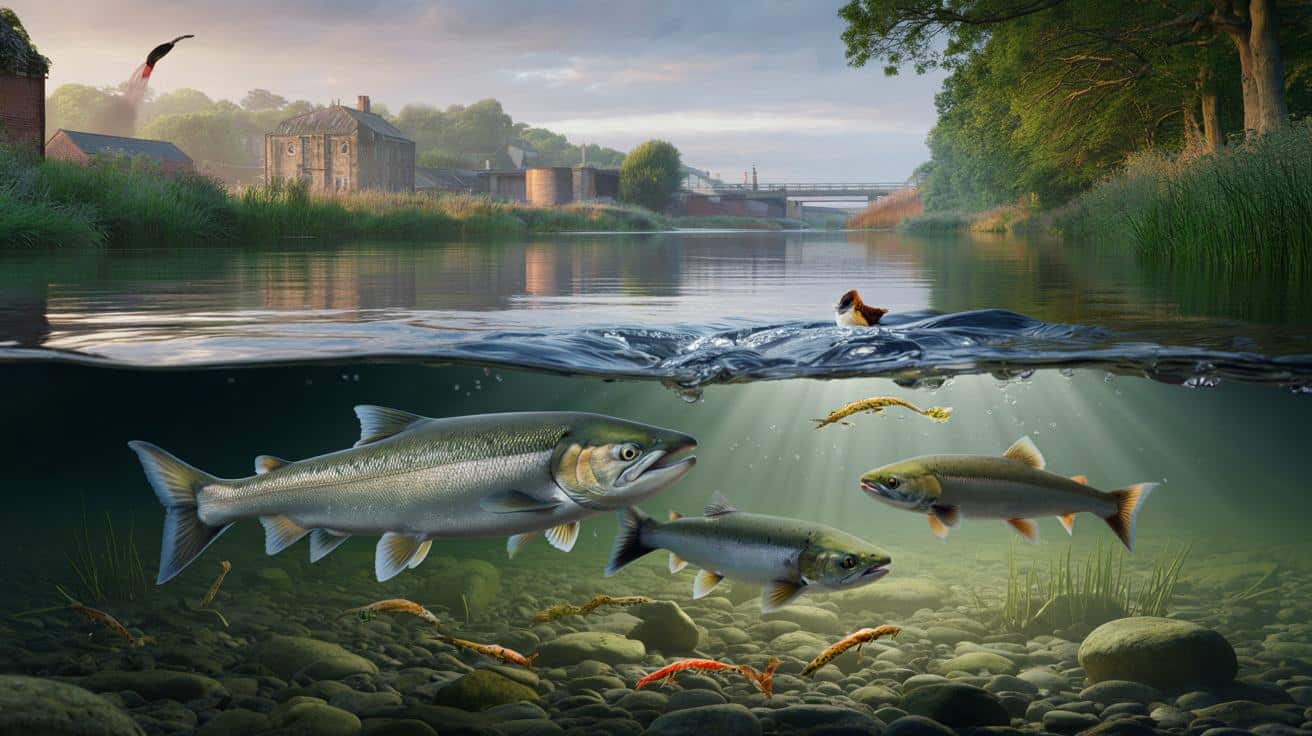
Young Atlantic salmon have been recorded in three rivers in north-west England for the first time since 2015: the Mersey, the Bollin and the Goyt. Biologists say this shows the fish are not just passing through but successfully spawning there again.
The species, classed as critically endangered in Britain since 2023, must complete an extraordinary journey to pull this off. Juvenile fish hatch in stony riverbeds, grow for a year or more in freshwater, then head to the North Atlantic, often feeding close to the Arctic Circle. After two or three years at sea, they fight their way back, driven by imprinting on the unique chemical “fingerprint” of their home river.
Finding wild-born young salmon in the Mersey, Bollin and Goyt confirms that some fish have completed this full migration cycle and spawned successfully in English rivers once written off as dead.
The Environment Agency says it will launch a new salmon distribution study, using modern genetic and environmental tools, to understand how far this recovery extends and which stretches of water still block the species’ comeback.
From ‘biologically dead’ to living rivers
In the 1980s, large parts of the Mersey catchment were effectively lifeless. Industrial discharges, sewage and chemical spills stripped oxygen from the water and coated riverbeds with toxic sludge. For many local residents, the Mersey became a symbol of pollution rather than a place to fish or walk.
Decades of tighter regulation on industry, investment in treatment works and a shift in public attitudes have changed that picture. Wastewater companies and regulators now point to these north-west rivers as case studies in long-term restoration.
Sections of river that once supported almost no aquatic life now hold invertebrates, insect larvae, pollution‑sensitive fish and returning top predators such as salmon and sea trout.
A wastewater catchment manager at United Utilities described how stretches that were “biologically dead” now support “thriving ecosystems”. Anglers report rising numbers of species that struggle to survive in dirty water, such as grayling and bullhead, which serve as early warning signs of improving conditions.
➡️ The forgotten kitchen liquid that makes grimy cabinets smooth, clean and shiny with almost no effort
➡️ IKEA brings a cult sofa back from the dead after 50 years – design fans rush to get one
➡️ Legendary rock band retires after 50 years “the hit everyone knows”
➡️ Doorbell camera captures conversation about stolen vehicle, leading to felony charge | Select
➡️ Your favorite color says a lot about you: what color psychology suggests
Why salmon matter as ecological barometers
Atlantic salmon sit near the top of the river food web. Their presence usually signals that a waterway provides:
- Clean, cool, well‑oxygenated water for eggs and juveniles
- Complex habitats with gravel beds, riffles and deeper holding pools
- Open migration routes from headwaters to estuary and sea
- Enough invertebrate life to feed young fish through multiple seasons
When salmon return, biologists often see this as a shorthand sign that everything from microscopic algae to kingfishers has found a way to function again. Their new appearance in the Mersey system suggests that decades of clean‑up work are beginning to show on a landscape scale, not just in isolated stretches.
Threats that still hold salmon populations back
Despite this positive signal, Atlantic salmon in Britain face a mix of chronic and emerging threats. Conservation bodies estimate that national populations have dropped by 30–50% since 2006.
| Pressure | Impact on salmon |
|---|---|
| Climate change | Warmer rivers reduce oxygen levels and stress young fish, while altered rainfall patterns disrupt spawning and migration. |
| Pollution | Sewage, agricultural runoff and industrial chemicals degrade spawning beds and can trigger lethal low‑oxygen events. |
| Invasive species | Non‑native plants and animals crowd out native species, change river flow and alter food webs. |
| Physical barriers | Weirs, dams and locks block vital routes between estuaries and upstream spawning grounds. |
These pressures combine. A river warmed by climate change becomes more vulnerable to pollution incidents. A weir that once posed an inconvenience can turn deadly when fish arrive exhausted after longer, hotter migrations.
The problem of blocked migration routes
Barriers remain one of the clearest obstacles to any sustained recovery. While salmon can now reach the Bollin and Goyt via the Mersey, other nearby rivers stay effectively closed off.
On the River Tame, multiple weirs break the river into a series of stepped pools that migrating salmon cannot navigate. On the River Irwell, the Mode Wheel locks at Salford Quays form a heavy, engineered wall between the estuary and upstream habitat.
Without new fish passes or barrier removals, significant lengths of potentially suitable spawning river stay unused, limiting how far these fragile populations can grow.
Local angling groups argue that relatively modest engineering works could unlock long sections of habitat on tributaries such as the Roch and Irk, and on rivers around Bolton. The technology is not new: fish passes, nature‑like bypass channels and even removal of obsolete structures have been used successfully on other British rivers.
Science gears up with eDNA and new surveys
The Environment Agency plans a fresh salmon distribution study in early 2026, using environmental DNA (eDNA) sampling. This technique detects tiny traces of genetic material that fish shed into the water through skin cells, mucus and waste.
Instead of relying solely on visual surveys or netting, researchers can take water samples along a river system and scan them for salmon DNA. That reveals where the fish have passed, even if no one actually sees them.
For a species present at low densities, this approach can pick up subtle changes in range. Managers can then target barrier removal, habitat work or enforcement against pollution where it will make the biggest difference.
How eDNA could change river management
eDNA sampling offers several advantages for salmon recovery work:
- It detects fish at very low densities, when sightings are rare.
- It covers long stretches of river quickly, with fewer staff on the ground.
- It avoids stressing fish with nets or capture methods.
- It creates a repeatable baseline for tracking change over years.
Combined with data on temperature, flows and pollution events, eDNA results can help policy‑makers understand where salmon are holding on, where they are expanding and where they are absent despite apparently good habitat.
What a full recovery could look like
A full return of Atlantic salmon to north‑west England would involve more than occasional young fish turning up in survey nets. It would mean stable, self‑sustaining runs of adults reaching multiple tributaries every year, with a wide age spread and enough numbers to withstand bad winters and hot summers.
That kind of recovery usually rests on several pillars:
- Consistent water quality standards, backed by enforcement on polluters
- Targeted barrier removal or fish pass construction on key migration routes
- Protection of gravel spawning beds from dredging and damaging floods
- Monitoring at sea to understand survival in a rapidly changing North Atlantic
Communities along these rivers would also see changes. Once‑avoided riverbanks can host walking routes, angling clubs, school visits and local festivals linked to the salmon run. Property developers already market waterside locations on cleaner rivers; a visible salmon presence would deepen that sense of restored value.
The sight of a silver fish leaping at a weir often becomes shorthand for a town’s wider environmental story, signalling that past damage no longer defines the place.
Why this matters beyond salmon
Although Atlantic salmon grab attention, they share habitats with many other species that benefit from the same work. Lampreys, eels, trout and coarse fish all need connected, clean rivers. Invertebrates that underpin the food web respond quickly to reduced pollution and more natural flows.
Restored rivers also help manage flood risk by slowing water in upstream floodplains rather than funnelling it rapidly downstream. Re‑meandered channels, tree planting along banks and reconnection with wetlands can reduce the height and speed of flood peaks, while creating more habitat for salmon fry and parr.
For residents, cleaner rivers mean lower health risks from contaminated water, more pleasant public spaces and potential boosts to local tourism. Urban stretches that once smelt of sewage can become places where people run, cycle or sit during lunch breaks, while anglers pay for permits that support local clubs and volunteer projects.
Practical lessons for other rivers
The return of young salmon to the Mersey, Bollin and Goyt offers a rough template for other catchments. Long‑term improvement did not come from a single flagship project but from steady pressure on pollution, better wastewater treatment and growing public refusal to accept “dead rivers” as normal.
For campaigners in other regions, one useful exercise is to map their local river system from sea to headwaters, marking every major barrier, discharge point and stretch of potential spawning habitat. This kind of home‑made atlas can highlight where a single fish pass or upgraded treatment works might reconnect huge areas for migratory fish.
Another practical step is citizen science. Simple kick‑sampling for invertebrates, basic temperature logging, and regular photographic records at set points along the river can create evidence that supports or challenges official assessments. Over a few years, that growing record can push authorities, companies and politicians to move faster.
North‑west England’s young salmon are not yet a success story locked in for good. They are more like a fragile early sign that past damage does not need to be permanent. If the barriers come down, literally and politically, these fish can turn from a rare headline into a regular part of river life again.